
125 YEARS
OF ENGINEERING
EXCELLENCE.
THE HISTORY
OF CABLE
INNOVATION WAS
WRITTEN HERE.
Throughout its history, our Leigh works has played an important role in the development of specialist cable technologies, pioneering new compounds, insulation materials and manufacturing techniques to meet the evolving demands of British industry, defence and aerospace.
That spirit of innovation continues today, building on more than 125 years of manufacturing expertise. This genuine provenance, depth of experience and craftsmanship are among the many strengths that set us apart, earning the trust of leading defence contractors around the world.

The Very Beginning
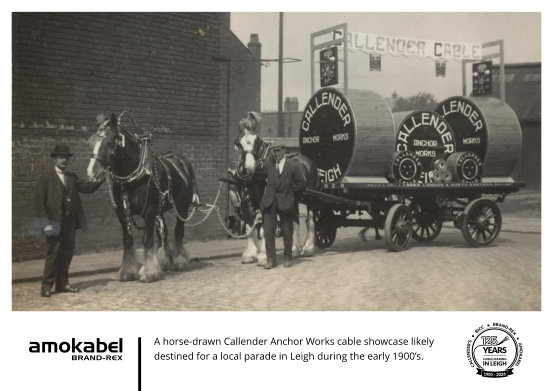
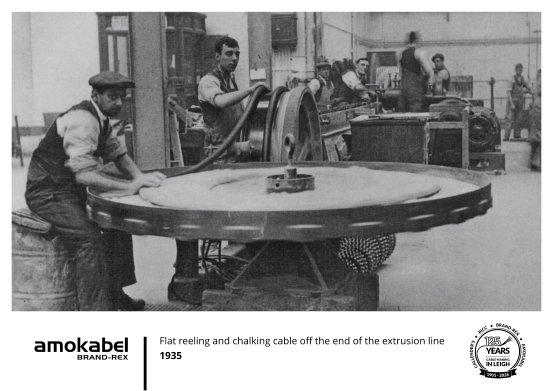
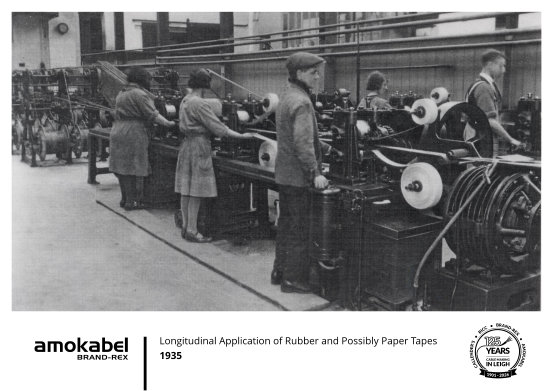
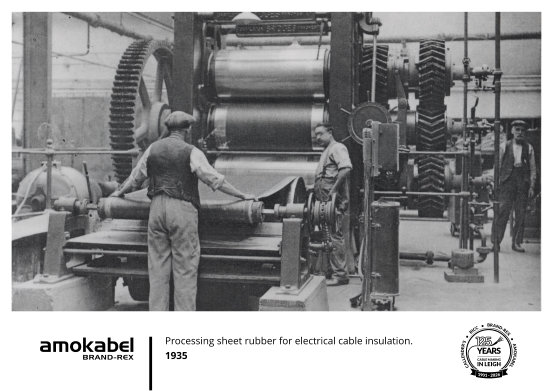
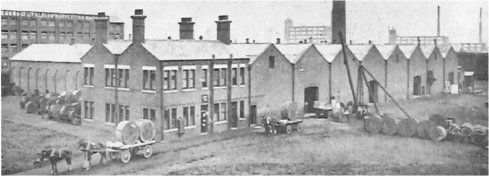
In 1900, George Shaw was elected Mayor of Leigh, England, with a commitment to bring new industry and employment opportunities to the town. Within just a few months, he had delivered on that promise, and on 31st December 1900 the Anchor Cable Company was formed. The company acquired 480,000 square feet of land and invested in machinery to manufacture vulcanised rubber, paper and bitumen insulated cables.
Rapid Growth
By the end of 1901, the office and factory buildings had been completed, machinery installed, and the company had already fulfilled several small contracts which was, even by today's standards, an impressive achievement in less than only twelve months. By 1902, the workforce had already grown significantly, from 65 to 154 employees.
Callenders Acquisition
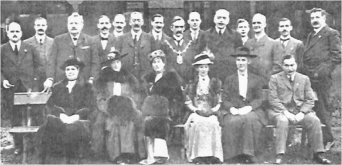
Seeking further investment, an acquisition by Callenders (Callender Cable and Construction Co.) was agreed. This proved to be a pivotal moment as Callenders was one of the most respected and established names in the emerging electrical cable manufacturing and installation industry.
The Electrification of Britain
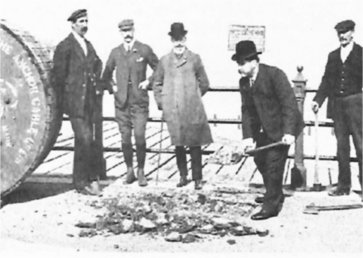
One of the first major contracts undertaken by the Leigh works came in 1905, involving the manufacture and installation of cables for the electrical lighting of Bridlington. The project marked an important milestone for the business, demonstrating its growing capabilities in the supply and installation of electrical infrastructure at a time when Britain was entering a new era of widespread electrification.
The World at War
A new range of general wiring cables with flexible metallic sheaths was introduced, known as the Kaleeco Wiring System. The demands of World War I brought numerous new contracts for military and naval applications, including specialist cables for paravanes, towed underwater devices used by the Royal Navy to sweep and clear naval mines.
To meet rising demand, further buildings were erected in 1917, significantly expanding the factory's manufacturing capabilities and production capacity, with the workforce growing to more than 330 employees.
Innovation Sets New Standards
A new, special rubber compound traded as Ancalite was introduced and became world famous as the first durable rubber compound for use in safety critical applications such as Railways.
The Kaleeco Wiring System was improved and renamed the Kalibond Wiring System, setting new standards for house wiring and widely specified by architects and engineers.
RMS Queen Mary
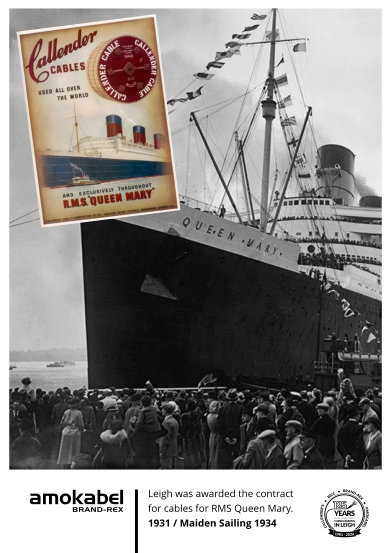
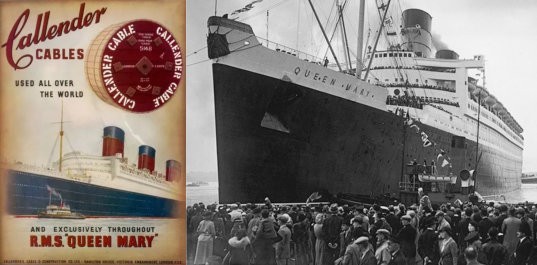
A new and successful range of ship cables was engineered at Leigh and a prestigious contract for the cabling of the latest Cunard vessel was secured. At the time, the only information available was that the ship was known as No. 534 which would later become one of the most famous ships in the world, the Cunard RMS Queen Mary - a vessel considerably larger, more powerful and more luxurious than the Titanic.
World War II & The National Grid
Calendars play a significant role supplying cables needed for the construction of the British National Grid, a major new electricity infrastructure project intended to form the backbone of the country's future energy supply.
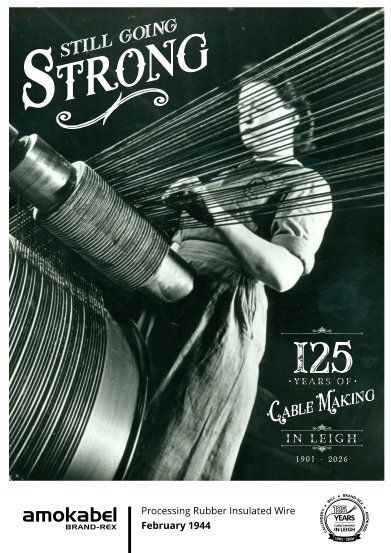
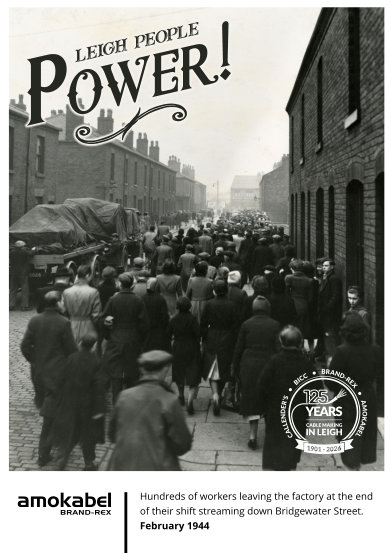
Once again, the factory in Leigh is called upon to support the war effort. Demand is high, with over 1,000 miles of communication cables being produced every week for the armed forces alongside designs for other military applications.
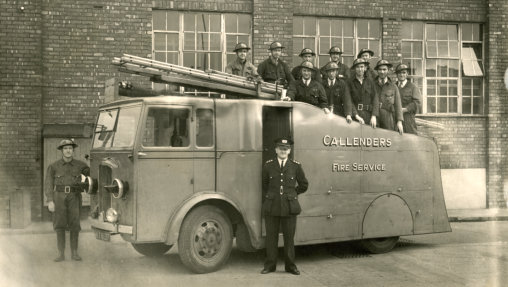
Sustained production is vital to the war effort, and the importance of the site leads to the establishment of its own dedicated fire service, equipped to respond to the threat of enemy air raids. This capability may also have provided valuable support to the surrounding community in the event of an attack.
Merger & Aerospace
By 1941, the factory was operating beyond capacity, driven by the immense demands of the war effort. Significant expansion was planned alongside negotiations to merge Callender's Cable & Construction Company with British Insulated Cables. The two companies merged in 1945, forming the well-known British Insulated Callender's Cables (BICC), and the Leigh works continued to grow, eventually employing almost 3,000 people.
As plastics became increasingly commonplace in cable insulation and sheathing, an entirely new manufacturing plant was constructed at Leigh, dedicated to the production of PVC-insulated aircraft cables.
With the Second World War driving rapid advances in defence technology, Leigh was once again called upon to work on something new: waveguides. This new microwave radar technology allowed for earlier detection and more precise location of aircraft in flight. Another dedicated manufacturing facility was established, supplying waveguides directly to the Ministry of Aircraft Production in support of the war effort.
The BICC Years
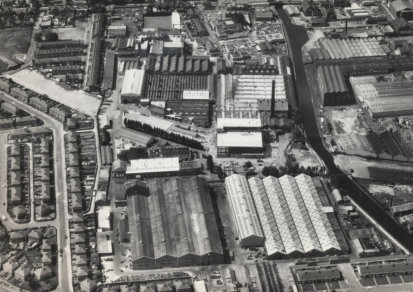
The BICC site in Leigh prospered over the following decades, expanding its manufacturing facilities, technical capabilities and market presence.
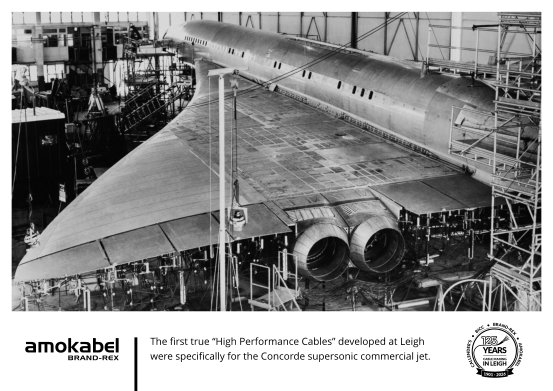
In the late 1950s, the Leigh works began pioneering cable technologies using advanced materials such as polytetrafluoroethylene (PTFE), offering exceptional performance in demanding applications and extreme environments. By the early 1960s, a dedicated PTFE facility had been established, operating almost as a separate business and specialising in the design and manufacture of high performance cables.
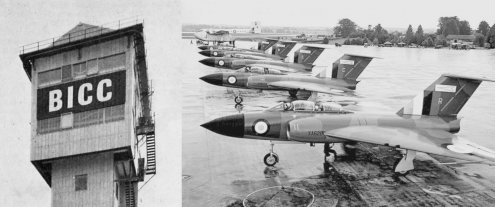
This operation continued to expand, introducing innovative cable constructions and material developments, particularly for aerospace and defence applications. It eventually became known as the High Performance Cables Unit, establishing a reputation for technical excellence and supplying some of Britain's most iconic aviation programmes including the Gloster Javelin, Hawker Siddeley Harrier, Concorde and Panavia Tornado.
Never. Stop. Innovating.
Drawing on generations of cable-making expertise and the latest advances in materials science, we continue to engineer specialist high-performance electrical cables for some of the most demanding defence applications, including Eurofighter, nuclear submarines, destroyers and land-based defence platforms. Trusted by leading defence contractors, we continue this work from the very same site where it all began over 125 years ago.
We are immensely proud of our heritage, our people, our technical achievements and our contribution to the world-leading defence programmes that keep our world safe and secure. Above all, we are proud of our historic cable-making town and the skill, dedication and ingenuity of the local people who have supported British industry and defence for generations.